At DFCon 2025, education extended beyond lectures and posters and into the lived experiences of patients with diabetic foot ulcers.
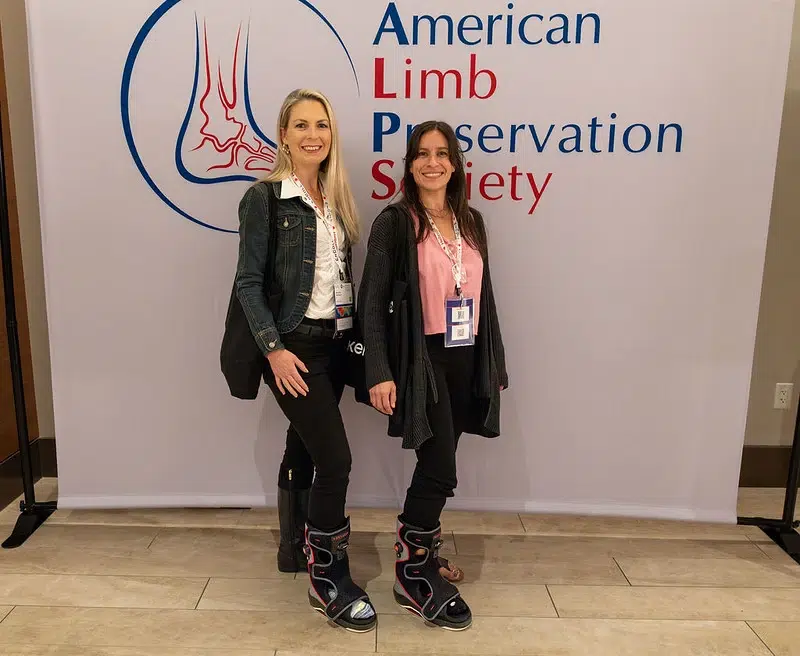
During the Pre-Conference Workshop of the 2025 Edition of the Diabetic Foot Conference in Anaheim, a group of volunteers participated in a unique activity designed to simulate the physical challenges faced by patients undergoing offloading treatment.
Equipped with medical grade offloading cast walkers (boots), typically prescribed to protect diabetic foot ulcers, participants committed to wearing the devices for the full duration of the conference.
“We wanted clinicians to quite literally walk in their patients’ boots,” says Ryan Crews, PhD, Associate Professor in the department of Podiatric Medicine and Surgery at the Rosalind Franklin University and ALPS Founding Secretary, who was one of the lead organizers behind the initiative.“Experiencing the weight, the awkwardness, and even the fatigue firsthand gives new meaning to the recommendations we often give.”
What Are Offloading Boots and Why Do They Matter?
Offloading cast walkers are commonly used to redistribute pressure away from ulcerated areas on the foot, promoting healing by minimizing mechanical stress during movement. While clinically effective, these boots can be heavy, reduce stability, alter posture and gait, and make everyday activities significantly more challenging.
To simulate this experience, volunteers wore a smart offloading boot that not only protected the foot but also tracked adherence using embedded sensors developed by Sensoria Health. The boots, generously provided in collaboration with Defender and Sensoria, made it possible to provide real-time patient perspective to this empathy experience. Their support was vital in bringing this learning activity to life.
The Feedback
Three volunteers wore the cast walkers from Wednesday through Friday, with two participants, Amanda Schittone and Jennifer Bingham, providing detailed feedback.
After 24 hours, all three volunteers strongly agreed (5 out of 5) that they had developed a new appreciation for the challenges patients face in adhering to offloading protocols.
However, when asked whether they liked using the cast walker, the average score was low, ranging from 2 to 3 out of 5.
Feedback included:
- “I can understand how using a cast walker could create other safety concerns around a patient’s home. There were multiple times I clunked the boot around tables, chairs, and a door frame.”
- “I understand why patients are not always compliant, as it is easy to neglect putting the boot back on once removed. As a woman, I did consider how it matched my clothes and the shoe I wore on the other foot.”
- “Easier to sleep with the boot off than on. Easier to walk on my heel to the bathroom than put the boot on during the night.”
Jennifer even wore the boot to work on Thursday, navigating meetings, transportation, and work obligations to simulate the real-life burden of compliance. Special thanks go to Fabiola Rodriguez and Adriana Garibay for managing the Smart Boot program at DFCon.
Patient Centered Education in Action
This experience serves as a reminder that even the most effective clinical guidance must be balanced with empathy, education, and support.
“With innovations in wound care, we have the power to save limbs and save lives,” said one participant. “But truly helping people means understanding what we’re asking of them.”
By physically stepping into their patients’ shoes and sharing their experience with other DFCon attendees, the DFCon community gained a new perspective—one that will undoubtedly influence how they counsel, treat, and advocate for patients moving forward.